
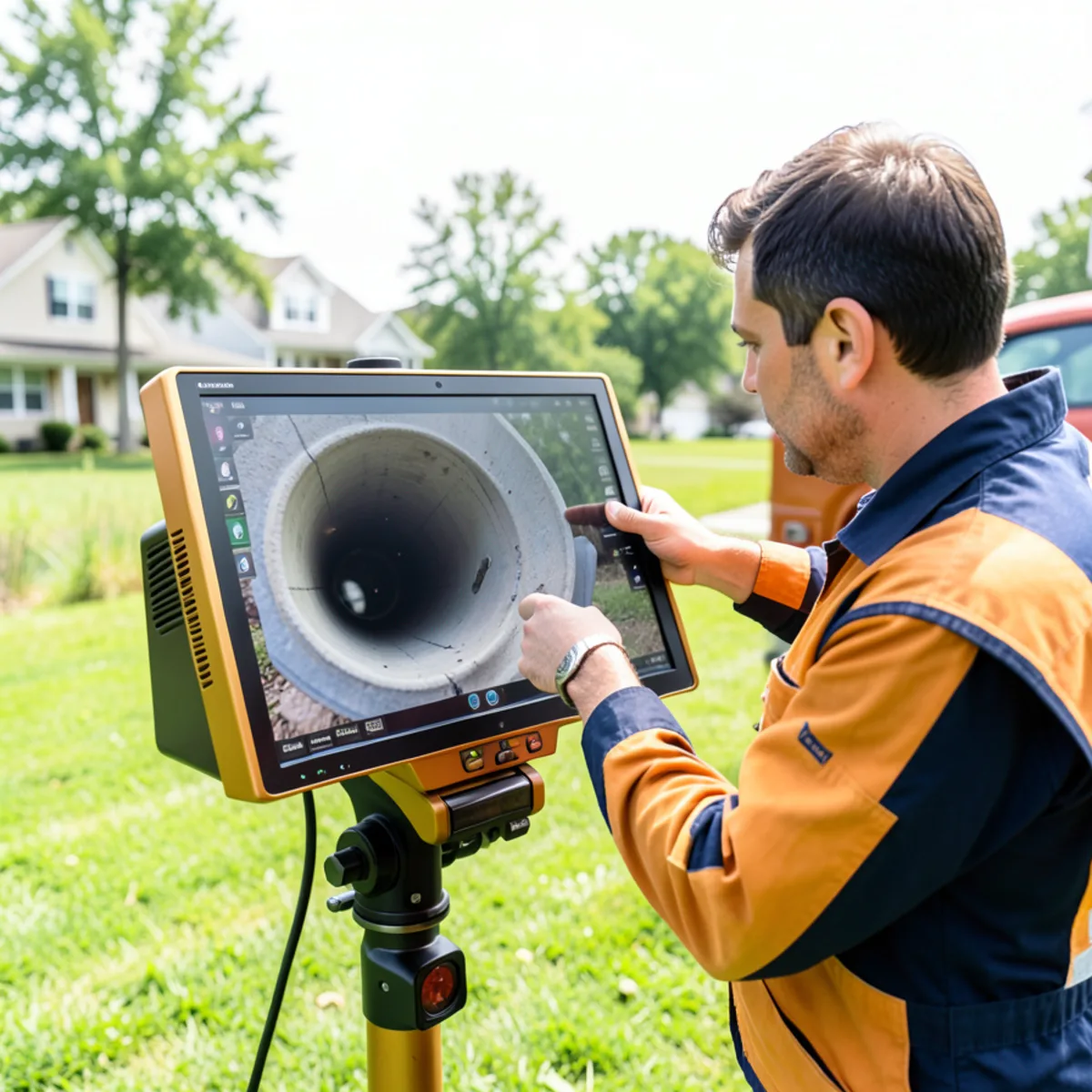
Your building sewer lateral carries all wastewater from your home foundation out to the municipal street sewer or private septic tank. When tree roots penetrate mortar joints or glacial till soil shifts fracture older clay pipes, raw sewage can surge back into basement living spaces.
Common Causes of Sewer Line Failure in Hartford County
Regional housing age, soil characteristics, and mature tree canopies contribute directly to subterranean sewer lateral failures:
- Tree Root Infiltration: Mature oaks and maples in established neighborhoods (such as Wethersfield, West Hartford, and Glastonbury) seek out warmth and moisture, pushing fibrous root hairnets through tiny gaps in vitrified clay pipe joints.
- Vitrified Clay & Bituminized Fiber (Orangeburg) Pipe: Homes built between the 1940s and 1970s frequently feature clay tiles or tar-paper Orangeburg pipes that have exceeded their engineered lifespan and become brittle or egg-shaped.
- Frost Heaves & Ground Settlement: New England winter freeze-thaw cycles cause ground movement that creates "bellies" (low spots where solids collect) or complete shear fractures.
- Grease Calcification: Years of fatty deposits binding with hard water minerals create rock-hard calcified obstructions along horizontal runs.
Modern Repair Options: Trenchless vs Traditional Excavation
Depending on the depth of the line, soil stability, and structural condition of the existing pipe, contractors evaluate two primary approaches:
| Repair Method | Best Application | Lawn & Driveway Impact | Expected Lifespan |
|---|---|---|---|
| Trenchless CIPP Epoxy Lining | Cracked, root-infested, or leaking pipes that retain circular shape | Minimal: requires only a small access cleanout pit | 50+ years (impervious to root penetration) |
| Pipe Bursting | Severely fractured, deformed, or brittle clay/Orangeburg lines | Moderate: requires small insertion and receiving pits | 100+ years (seamless high-density polyethylene) |
| Traditional Open-Cut Excavation | Collapsed pipes, back-pitched bellies, or complex utility crossings | Full excavation along the pipe trench using mini-excavator | 50–100 years (heavy-wall SDR-35 PVC pipe) |
Need Urgent Plumbing Assistance in Greater Hartford?
Connect with an independent local pro ready to dispatch across Glastonbury, East Hartford, Manchester, and surrounding towns. Free to call with upfront written estimates.
Vitrified Clay vs Bituminized Fiber (Orangeburg) Aging Dynamics
Throughout post-war Hartford County subdivisions built between 1945 and 1972, civil contractors installed two predominant underground drain materials that now present severe maintenance challenges. Vitrified clay pipes were manufactured in short three-to-four-foot bell-and-spigot segments connected by tar, oakum, or mortar collars. Over 50 to 70 years of soil movement, these brittle mortar joints crack, allowing moisture vapors to leak into surrounding soils. Thirsty root systems from nearby white oaks and red maples detect these nutrient vapors, forcing microscopic root tendrils into the joint gaps.
Even more volatile is Orangeburg pipe—a composite pipe fabricated from wood pulp fibers impregnated with coal tar pitch, widely deployed during wartime copper and iron shortages. Orangeburg pipe lacks structural rigidity; after decades of groundwater saturation and overhead soil compaction, it deforms into an oval shape, blisters internally, and collapses under moderate earth loads. A certified video camera inspection is the only definitive method to distinguish between cleanable root infiltration in clay tiles and imminent structural collapse in failing Orangeburg laterals.
Engineering Details: Cured-In-Place Pipe (CIPP) Trenchless Lining
Trenchless CIPP lining represents a major breakthrough in residential utility repair, eliminating the need to trench open paved driveways, stone retaining walls, and mature specimen trees. The engineering process involves saturating a custom-measured non-woven polyester felt liner tube with a high-performance two-part thermosetting epoxy resin system under controlled vacuum conditions.
Using pneumatic inversion tanks or hydraulic winches, the epoxy-saturated liner is introduced into the cleaned host pipe from a single small excavation pit or existing cleanout riser. Compressed air expands the flexible tube tightly against the inner walls of the existing damaged sewer pipe. Hot water, pressurized steam, or ultraviolet (UV) light banks are circulated through the liner to initiate thermal cross-linking. Within several hours, the epoxy cures into a continuous, jointless, glass-smooth structural pipe that resists root invasion, bridges shear fractures, and restores full gravity flow with an engineered lifespan exceeding 50 years.
The 6-Step Underground Sewer Inspection & Repair Engineering Protocol
Underground sewer infrastructure demands rigorous diagnostic verification and precise civil engineering. Independent contractors dispatched through our Glastonbury line follow a disciplined 6-step protocol to eliminate recurring backups and restore permanent wastewater conveyance:
- 1Continuous Digital Sonde Camera Survey: A high-definition, self-leveling fiber-optic inspection camera with an integrated 512 Hz locating sonde travels through the entire lateral, projecting live video of joint displacements, root masses, and pipe cracks while mapping above-ground depth and alignment.
- 2High-Torque Mechanical Descaling & Hydro Jet Hydro-Scour: Heavy-duty flexible shaft chains and high-velocity water jetters clean out heavy root intrusions, remove mineral tuberculation, and restore host pipe circumference back to original diameter.
- 3Engineering Scope & Municipal WPCA Permitting: The contractor determines whether trenchless CIPP lining, pipe bursting, or open-cut excavation is optimal, secures town street excavation permits, coordinates with the local WPCA or MDC, and schedules utility mark-outs via CBYD 811.
- 4Precision Structural Lining or SDR-35 Excavation: The epoxy-impregnated felt liner is inverted and thermo-cured under continuous pressure, or mechanical mini-excavators excavate the trench to lay heavy-wall SDR-35 PVC pipe bedded in compacted three-quarter-inch crushed stone.
- 5Pressure Testing & Secondary Video Verification: The newly rehabilitated line undergoes flow velocity and pressure testing, followed by a recorded secondary camera sweep confirming glass-smooth internal surfaces, watertight couplings, and zero grade deviations.
- 6Civil Restoration & Site Clean-Up: The excavation trench is backfilled in six-inch lifts with vibratory compaction to prevent future lawn settlement, paved surfaces or concrete sidewalks are patched to municipal engineering specifications, and digital video records are provided to the homeowner.
Municipal WPCA & MDC Coordination in Greater Hartford
In member towns of the Metropolitan District Commission (MDC)—including Hartford, East Hartford, Wethersfield, and West Hartford—property owners must coordinate sewer lateral repairs with regional wastewater utility rules. Under MDC bylaws, the property owner owns and maintains the sewer lateral from inside the foundation wall out to the connection hub at the public street sewer main. In non-member towns like Glastonbury and Manchester, municipal Water Pollution Control Authorities (WPCAs) maintain separate regulatory oversight.
Before any underground excavation begins, Connecticut law mandates calling "Call Before You Dig" (CBYD 811) at least two business days in advance to mark underground gas, electric, telecommunication, and water utilities. Licensed P-1 contractors manage all CBYD ticketing, town trench safety requirements, OSHA shoring compliance, and town engineering backfill inspections to protect your property and municipal infrastructure.
House-to-Septic Lateral Line Maintenance in Glastonbury & Portland
In semi-rural sections of Glastonbury—including Nayaug, South Glastonbury, and Eastbury—as well as neighboring Portland, homes rely on private on-site wastewater disposal systems rather than public sewer mains. The underground four-inch building sewer pipe running from the foundation wall out to the concrete septic tank inlet baffle presents unique technical requirements. If soil settles between the house foundation and the septic tank, the pipe can shear at the tank penetration collar or develop a reverse pitch (belly) where wastewater pools and solidifies. During heavy winter frost conditions, cold air penetrating septic cleanout risers can freeze stagnant standing water in unpitched runs. Licensed excavation contractors inspect the tank inlet sanitary tee, confirm watertight rubber boot seals at the tank wall, and replace sagging pipe runs with heavy-schedule SDR-35 PVC set on a compacted six-inch bedding layer of crushed three-quarter-inch stone.
Sewer Gas Infiltration & Foundation Penetration Diagnostics
Persistent sewer gas odors in basement living areas often indicate broken subterranean cast-iron sewer lines beneath the concrete floor or dried-out P-traps in rarely used basement floor drains. When conventional visual inspection cannot find the origin, contractors perform non-toxic artificial smoke testing. A specialized blower introduces pressurized white smoke into the sewer system while the cleanout is sealed. Smoke rapidly escapes through hidden foundation cracks, broken vent pipes, or fractured wax gaskets, visually confirming the breach location without destructive wall demolition.
What Drives Underground Sewer Repair Costs in Hartford County?
Underground sewer rehabilitation is a major residential investment governed by physical depth, lateral length, and surface restoration requirements. In Greater Hartford, localized cleanout installation and short mechanical spot repairs generally range between $850 and $2,200. Trenchless epoxy lining projects typically range from $4,000 to $9,500 depending on total linear footage, while extensive open-cut excavations requiring street pavement cuts, municipal police traffic details, and deep shoring reach $7,500 to $15,000+.
Key cost variables include the depth of the burial line (shallow four-foot trench vs deep ten-to-twelve-foot municipal street connections), crossing beneath paved asphalt driveways or manicured hardscapes, municipal street-opening bond fees, and whether high groundwater conditions near the Connecticut River require dewatering pumps.
Why Connect Through Our Glastonbury Sewer Dispatch Desk?
Hector Plumbing Solutions provides homeowners with direct telephone access to experienced, independent sewer and excavation contractors across Greater Hartford. Benefits of connecting through our desk include:
- Specialized Underground Equipment: We route calls to contractors who possess both advanced trenchless lining rigs and mini-excavation machinery.
- Upfront Itemized Written Proposals: Independent pros provide transparent, written diagnostic proposals detailing scope, materials, and warranties before any excavation begins.
- Full Municipal Compliance: Contractors handle all town building permits, street-opening bonds, and MDC / WPCA utility sign-offs.
- Verification of Trade Credentials: We encourage all property owners to verify contractor P-1 Unlimited Plumbing licenses on the official Connecticut DCP registry at elicense.ct.gov.
Sewer Line Repair & Inspection Equipment & On-Site Diagnostics

Root intrusion inside underground clay sewer pipe
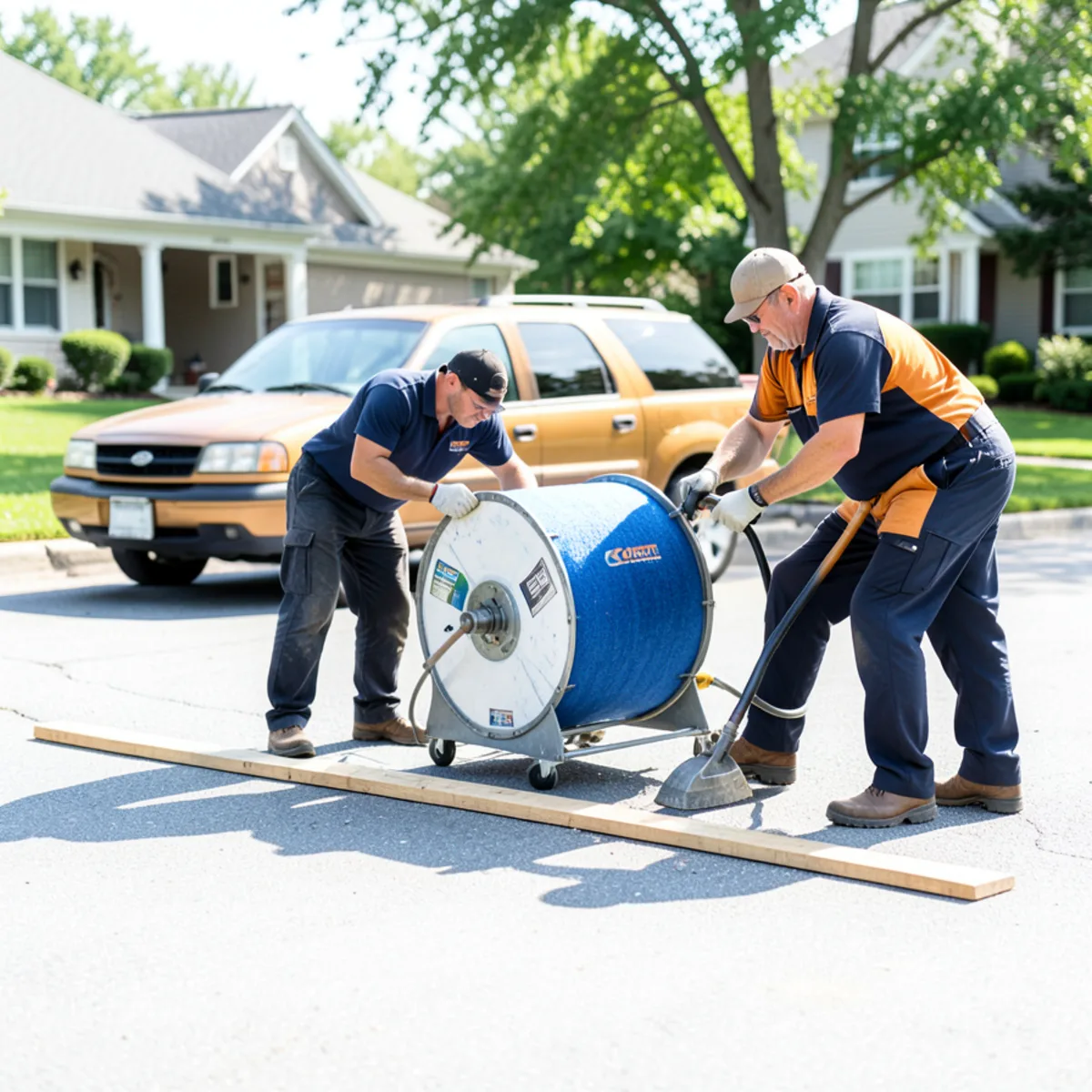
Trenchless epoxy sewer lining equipment
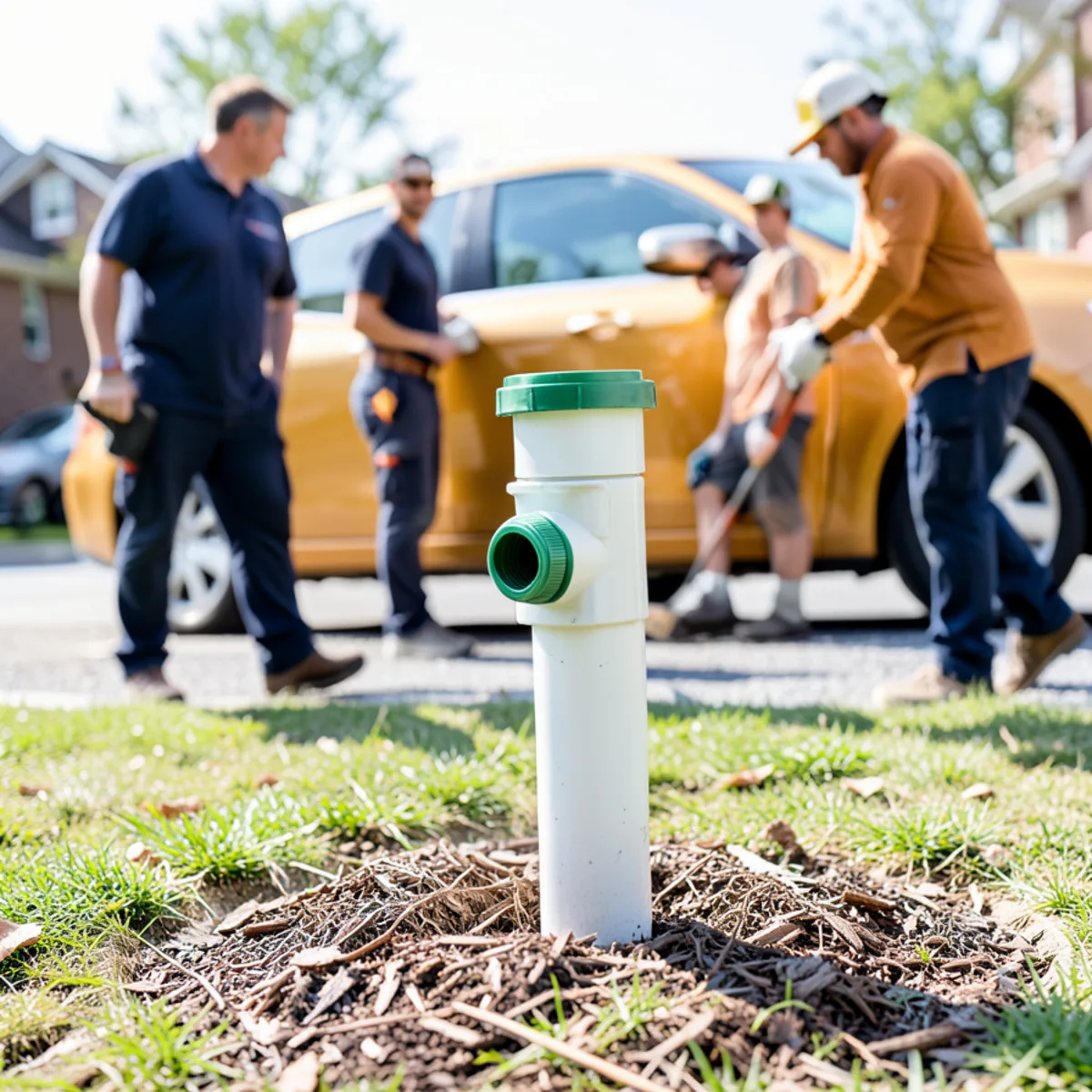
Installed outdoor PVC sewer cleanout riser
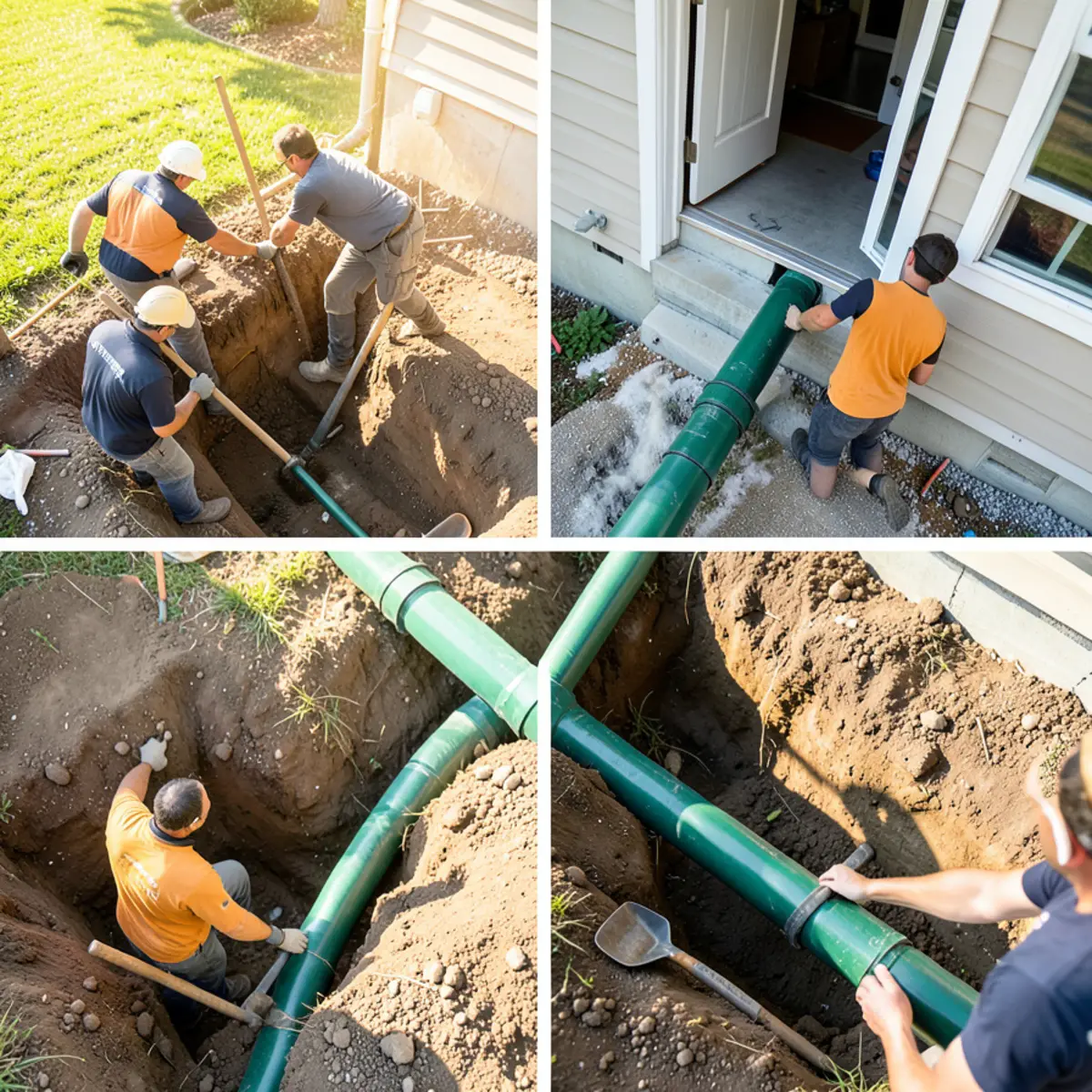
Excavation trench for sewer pipe replacement
Where We Connect Sewer Line Repair & Inspection Calls
Independent contractors taking calls for sewer line repair & inspection dispatch promptly across the following primary Greater Hartford towns:
Sewer Line Repair & Inspection FAQs
Answers to common questions regarding diagnostic methods, pricing factors, and service timelines.
In Connecticut, the property owner owns and is legally responsible for the entire sewer lateral from inside the foundation wall out to the physical connection point at the municipal sewer main in the public street. The town or utility is only responsible for the public collection main.